Dermal Fillers in KL, Selangor & Putrajaya: What It Is, Types & Benefits
Dermal fillers are a popular non-surgical treatment used to restore facial volume, soften lines, and enhance facial features. Different types of fillers are used for different areas of the face, depending on the concern being treated and the result being planned.
In this article, we explain what dermal fillers are, the different types available, what concerns they can help with, and what to expect if you are considering treatment in Kuala Lumpur, Selangor, or Putrajaya.
What Are Dermal Fillers?
Dermal fillers are injectable substances placed beneath the skin to restore volume, improve contour, and soften facial folds. They are commonly used in areas such as the cheeks, lips, chin, jawline, and under eye regions.
Different fillers are made from different materials, which means they do not all work in the same way. Some are designed to give immediate volume, while others help stimulate collagen and improve support more gradually. This is why filler treatment should always be chosen based on the treatment area, skin condition, and overall aesthetic goal.
Common Concerns Dermal Fillers Can Help Improve
Dermal fillers are commonly used to improve concerns related to volume loss, facial folds, reduced definition, and facial imbalance.
They may help improve:
- facial volume loss
- hollow cheeks or temples
- smile lines
- marionette lines
- thin lips
- under eye hollowness
- reduced chin or jawline definition
- overall facial harmony and balance
Because facial ageing and facial proportions vary from one person to another, the most suitable treatment plan should always come after a proper facial assessment.
Target Areas for Dermal Fillers
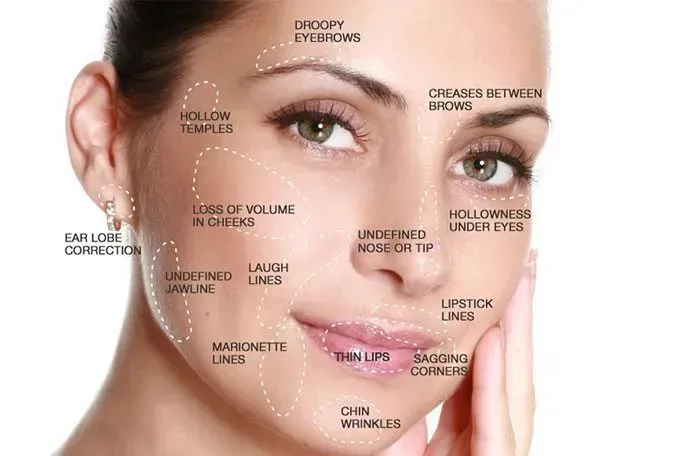
Dermal fillers are commonly used in areas of the face where volume loss, hollowing, or visible folds become more noticeable over time.
Common target areas include:
- cheeks
- temples
- nasolabial folds
- marionette lines
- lips
- chin
- jawline
- under eye area
The exact treatment areas depend on your facial structure, the type of filler used, and the result you are trying to achieve.
Top 6 Benefits of Dermal Fillers
One of the main reasons dermal fillers remain so popular is that they can improve the face in a way that is both visible and customisable. When used thoughtfully, fillers can refresh the face without surgery and without making the result look overdone.
1. Restore Lost Volume
Dermal fillers can restore fullness in areas that have become hollow or sunken, especially the cheeks, temples, and under eye regions. This can help the face look more supported and less tired.
2. Soften Wrinkles and Folds
Fillers can help reduce the appearance of smile lines, marionette lines, and other facial folds by supporting the skin from beneath.
3. Improve Facial Contours
Fillers are often used to enhance definition in areas such as the lips, chin, and jawline. This can improve facial balance and create a more refined profile.
4. Provide Immediate or Early Visible Improvement
Many filler treatments offer visible improvement soon after the procedure, which is one reason they are often chosen by those who want a result that does not take months to appear.
5. Offer a Non-Surgical Option
Dermal fillers can improve facial features and signs of ageing without surgery. Recovery is usually manageable, which makes them practical for those with work, social, or family commitments.
6. Allow Personalised Treatment
Different filler types can be used for different goals, from subtle lip enhancement to deeper structural support. This makes dermal fillers one of the most adaptable treatment categories in aesthetic medicine.
How Do Dermal Fillers Work?

Dermal fillers work by adding support beneath the skin. Depending on the material used, they may replace lost volume directly, attract water for hydration, or stimulate collagen production over time.
This is why filler selection matters. A soft hyaluronic acid filler may be chosen for subtle shaping or hydration, while a firmer product may be used for structure, contour, or deeper fold correction. Collagen stimulating fillers work more gradually and are often used when the goal is longer term support rather than only immediate volume.
Types of Dermal Fillers
There are several types of dermal fillers, and each one has a different role. The best option depends on the area being treated, the result you want, and how long you want the improvement to last.
1. Hyaluronic Acid Fillers
Hyaluronic acid, or HA, fillers are the most common type of dermal filler. Hyaluronic acid is a substance naturally found in the body and is widely used to restore volume, improve hydration, and soften wrinkles. Results commonly last about 6 to 12 months, although this varies by product and treatment area.
Common HA filler brands include Juvederm, Restylane, Teoxane, Belotero, Revanesse Versa, and the RHA Collection. SKINVIVE by JUVEDERM also belongs to the HA category, but it is more focused on skin smoothness and hydration than classic volumising.
2. Calcium Hydroxylapatite Fillers (eg: Radiesse)
Calcium hydroxylapatite, or CaHA, fillers are often used for deeper wrinkles, cheek volume, and facial contouring. This material is similar to a mineral naturally found in bone.
Radiesse is the best known example in this category. It is often chosen when stronger structure and support are needed, especially in areas such as the cheeks or jawline. Results often last around a year and may last longer in some cases.
3. Poly L Lactic Acid Fillers (eg: Sculptra)
Poly L lactic acid, or PLLA, fillers work by stimulating collagen production over time. Sculptra is the best known PLLA filler.
Rather than giving only immediate volume, it is used to gradually improve facial support and restore volume loss linked to ageing. Treatment is usually done as a series, and the effects can last up to 2 years. This type of filler is often suited to those who prefer a more gradual and natural looking change.
4. PMMA Fillers (eg: Bellafill)
PMMA, or polymethylmethacrylate, fillers are long lasting fillers used for selected deeper wrinkles and folds. Bellafill is the best known example in this category.
Because PMMA is not absorbed by the body in the same way as temporary fillers, it is generally not the first choice for someone new to filler treatment. These fillers require careful selection because the result is less easily adjusted compared with temporary filler types.
Comparison Table Between Different Types of Dermal Fillers
| Criteria | Hyaluronic Acid Fillers | Calcium Hydroxylapatite Fillers | Poly L Lactic Acid Fillers | PMMA Fillers |
|---|---|---|---|---|
| Main purpose | Restore volume, improve hydration, soften wrinkles, and enhance contour | Provide stronger structure, contour, and support for deeper folds | Stimulate collagen and gradually restore facial volume | Long lasting correction of selected deep wrinkles and folds |
| Common examples | Juvederm, Restylane, Teoxane, Belotero, Revanesse Versa, RHA Collection, SKINVIVE | Radiesse | Sculptra | Bellafill |
| How fast results appear | Immediate or near immediate | Immediate or near immediate | Gradual over weeks to months | Immediate |
| Typical duration | About 6 to 12 months | Around 1 year, sometimes longer depending on use | Up to 2 years | Long lasting or permanent |
| Best suited for | Lips, cheeks, folds, under eye area, and hydration focused correction | Jawline, cheeks, deeper folds, and contouring | Facial volume loss and gradual collagen rebuilding | Selected deep wrinkle correction |
| Main strength | Versatile and widely used | Stronger support and contour | Natural looking improvement over time | Very long duration |
| Things to consider | Maintenance is usually needed | Not ideal for every area | Usually requires multiple sessions | Not usually a first time choice |
This table is useful as a guide, but the right filler still depends on the face being treated and the result being planned.
What Kind of Results Should I Expect?
Results depend on the filler type, the treatment area, and your starting point. With many hyaluronic acid and contouring fillers, the improvement is visible straight away or soon after treatment. With collagen stimulating fillers such as Sculptra, the result develops more gradually.
A good filler result should make the face look better supported, more balanced, and more refreshed. The goal is not simply to add volume, but to place the right amount of support in the right area, so the result still looks natural.
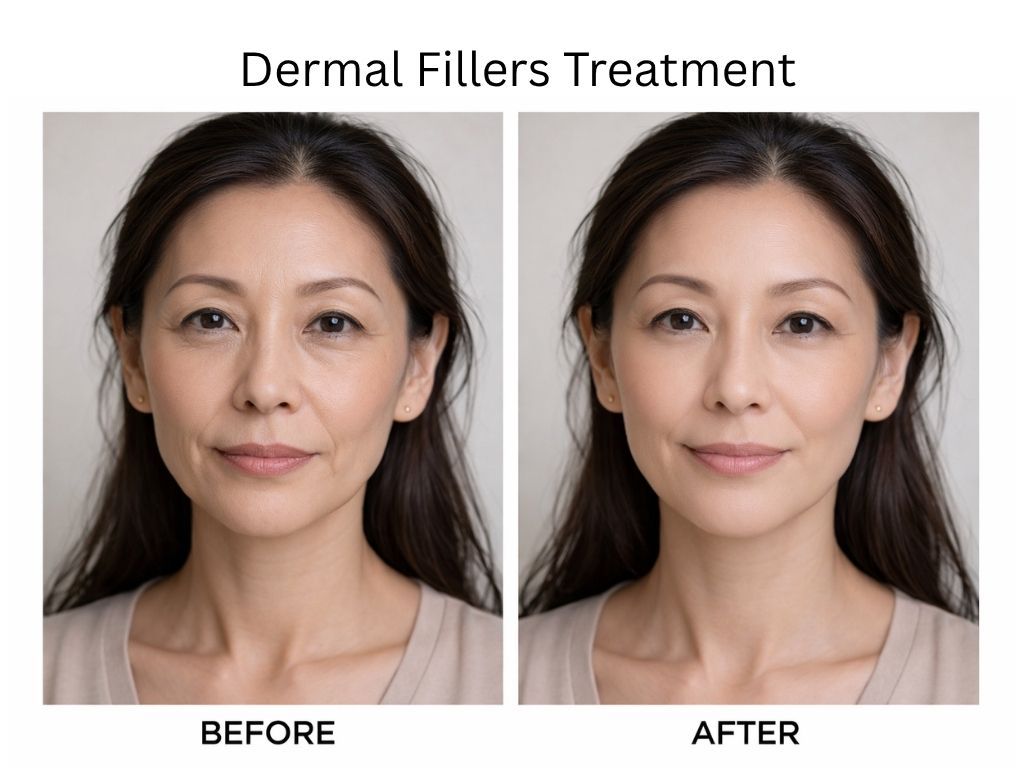
Dermal Fillers Before & After
Does Dermal Fillers Have Side Effects?
Like any injectable treatment, dermal fillers can have side effects. Most are temporary and settle as the area heals. Common short-term effects include swelling, redness, tenderness, bruising, itching, and small lumps or bumps under the skin.
The most serious risk is accidental injection into a blood vessel. Although uncommon, this can lead to blocked blood flow, tissue damage, vision problems including blindness, or stroke. Therefore, dermal fillers should only be performed by a properly trained medical practitioner using approved products and careful technique.
Choosing a Dermal Fillers Clinic in Kuala Lumpur, Selangor or Putrajaya
If you are comparing clinics, it is important to look beyond price alone. The quality of consultation, treatment planning, technique, and aftercare all play a major role in both safety and results.
It is also important to choose a clinic that uses authentic products and has trained practitioners, as this helps support both treatment quality and safety. A proper consultation should explain whether dermal fillers suit your facial concerns, which type of filler may be more suitable for the area being treated, what kind of result is realistic, and what to expect during recovery and aftercare. When the explanation is clear, the treatment journey usually feels easier to understand and more reassuring.
At RegenX Clinic, you can visit our Putrajaya or Damansara Heights branches for personalised dermal filler consultation and treatment planning. Our treatments are performed by an LCP Certified Doctor, giving you added confidence that your care is guided by trained and qualified medical expertise. This allows those in Kuala Lumpur, Selangor, and Putrajaya to access professional care in a convenient location while receiving recommendations tailored to their facial structure, skin condition, and aesthetic goals.
Conclusion
Dermal fillers are best understood as a category of injectable treatments used to restore volume, soften folds, and improve facial balance without surgery. Some fillers are designed for immediate correction, while others work more gradually by stimulating collagen. The right choice depends on your facial concerns, the area being treated, and the kind of result you want to achieve.
If you are considering dermal fillers in KL, Selangor, or Putrajaya, the most useful next step is a proper consultation. A careful assessment helps determine which type of filler is suitable, what result is realistic, and whether filler treatment is the right fit for your goals.
Choose RegenX Clinic for Dermal Fillers

Dermal fillers work best when they are planned carefully according to facial structure, skin condition, and overall treatment goals. That is why choosing the right clinic matters.
At RegenX Clinic, we provide personalised dermal filler consultations to help you understand whether filler treatment is suitable, which type may be recommended, and what kind of improvement to expect. Our approach focuses on clear guidance, realistic planning, and treatment recommendations tailored to your individual needs, with treatment performed by an LCP Certified Doctor.
Visit RegenX Clinic Putrajaya or RegenX Aesthetic Damansara Heights for a personalised consultation.
Contact us on WhatsApp to learn more or book an appointment.
FAQs
1. What are dermal fillers?
Dermal fillers are injectable substances used to restore volume, soften wrinkles and folds, and enhance facial contours. Different types are made from different materials and are chosen based on the treatment goal.
2. How long do dermal fillers last?
How long dermal fillers last depends on the type of filler used, the treatment area, and how your body responds to the product. In general, hyaluronic acid fillers usually last about 6 to 12 months, calcium hydroxylapatite fillers can last around 1 year, and collagen stimulating fillers such as Sculptra can last up to 2 years.
3. What areas can dermal fillers treat?
Dermal fillers are commonly used in the cheeks, lips, temples, chin, jawline, under eye area, nasolabial folds, and marionette lines.
4. What is the difference between hyaluronic acid fillers and Sculptra?
Hyaluronic acid fillers mainly add volume directly and often give faster visible results. Sculptra is a collagen stimulating filler that works more gradually over time.
5. Is there downtime after dermal fillers?
Downtime is usually mild. Some swelling, bruising, redness, or tenderness can happen after treatment, but many people return to normal activities quite quickly.
6. Are dermal fillers safe?
Dermal fillers can be safe when performed by a trained medical professional using appropriate products and technique. Like all injectables, they still carry risks and should be planned carefully.
7. How much do dermal fillers cost in Malaysia?
The cost depends on the type of filler, the number of syringes or vials needed, the treatment area, and the clinic. A proper consultation is the best way to get an accurate quotation.