Microneedling: Collagen Stimulating Treatment for Scars, Pores & Fine Lines
Understand Microneedling in Malaysia
Microneedling is a collagen stimulating treatment, also known as collagen induction therapy, designed to improve skin quality through a controlled renewal process. By creating thousands of tiny microchannels at a planned depth, microneedling activates the skin’s natural repair response. Over time, this can support new collagen and elastin production, leading to gradual improvements in acne scars, visible pores, fine lines, and overall texture.
In this guide, we explain what microneedling is, what concerns it can treat, how it works, and how to choose between the main types, including traditional microneedling, microneedling with PRP, radiofrequency microneedling, and hydration focused add ons. We also cover realistic results timelines, what to expect during recovery, and aftercare principles that help you heal well and get the best outcome.
What is Microneedling?
Microneedling (also called collagen induction therapy) is a minimally invasive treatment that uses a sterile device with tiny needles to create very small, controlled micro-channels in the skin. These micro-injuries stimulate the body’s natural healing response, which can increase collagen and elastin production over time. As a result, skin texture may gradually improve, including concerns like acne scars and fine lines.
In clinical settings, microneedling is commonly performed with an automated microneedling pen device. You may hear device names like Dermapen or SkinPen, which are brand names of microneedling pens. The treatment is still microneedling, and the brand name mainly refers to the device used to deliver controlled needling at adjustable depths.
The goal is not to thin or strip the skin, but to encourage the skin to rebuild a smoother, stronger structure while preserving surrounding tissue. This is one reason microneedling is often associated with minimal downtime compared with more aggressive resurfacing approaches. Most patients choose microneedling because they want a natural looking upgrade in skin quality, rather than a sudden dramatic change.
Uses of Microneedling
Microneedling is commonly used to improve the appearance of the following:
- Acne scars, especially shallow to moderate atrophic scarring
- Enlarged pores and uneven texture
- Fine lines and early wrinkles
- Roughness and dullness
- Uneven tone and mild pigmentation irregularities in selected cases
- Stretch marks and textural scars on selected body areas
If your main issue is active inflamed acne, the priority is usually calming acne first, then treating scarring once inflammation is controlled.
Benefits of Microneedling

Microneedling benefits tend to be most noticeable in skin texture and overall smoothness. Benefits can include:
- Smoother texture and refined pore appearance
- Softer looking acne scars over a series
- Improved skin firmness and bounce as collagen remodels
- More even light reflection, often described as a healthier glow
- Better tolerance for simple barrier supportive skincare during recovery, when guided by your clinic
Microneedling works best as a planned series, because collagen remodeling is a gradual process.
Areas We Treat with Microneedling
Microneedling can be performed on both face and body depending on goals and suitability:
- Face, including cheeks, forehead, jawline, chin
- Neck in selected cases
- Décolletage in selected cases
- Body areas affected by stretch marks or textural scars, such as abdomen, hips, thighs
Different zones require different depths and settings. A careful plan is what keeps results consistent and recovery comfortable.
How Does Microneedling Work?
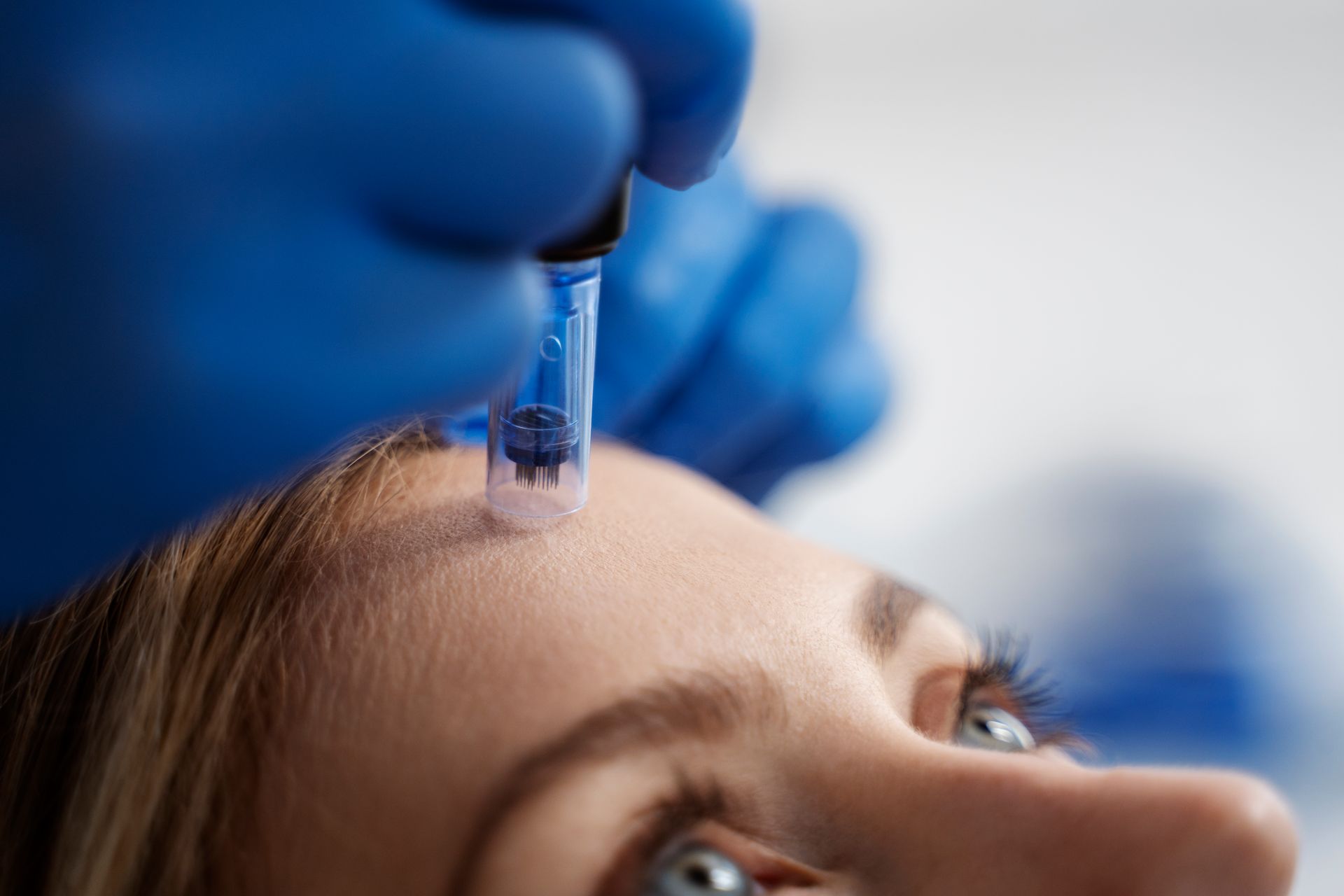
Microneedling works through controlled stimulation and controlled recovery:
- Microchannels are created at a planned depth
- The skin starts a healing sequence that includes new collagen formation
- Over the next weeks and months, collagen fibers reorganize and strengthen
- Texture gradually improves, often first as smoother feel, later as scar softening and pore refinement
This is why a good microneedling plan focuses on steady improvement rather than instant change.
Types of Microneedling
1. Traditional Microneedling
Traditional microneedling uses an automated pen device with fine sterile needles to create microchannels in targeted areas. Many clinics perform this using a microneedling pen device such as Dermapen or SkinPen. These names refer to the device used, while the treatment type remains traditional microneedling.
Traditional microneedling is often the most cost effective starting option for improving pores, early fine lines, and mild to moderate acne scarring.
Common benefits include:
- Supports collagen and elastin production
- Helps reduce the appearance of acne scars and certain superficial scars
- Improves texture and tone
- Refines the look of pores
- Softens early fine lines
- Can improve the feel of stretch marks over a series
- Supports absorption of simple, non irritating products used during recovery when clinic guided
Dermapen vs SkinPen
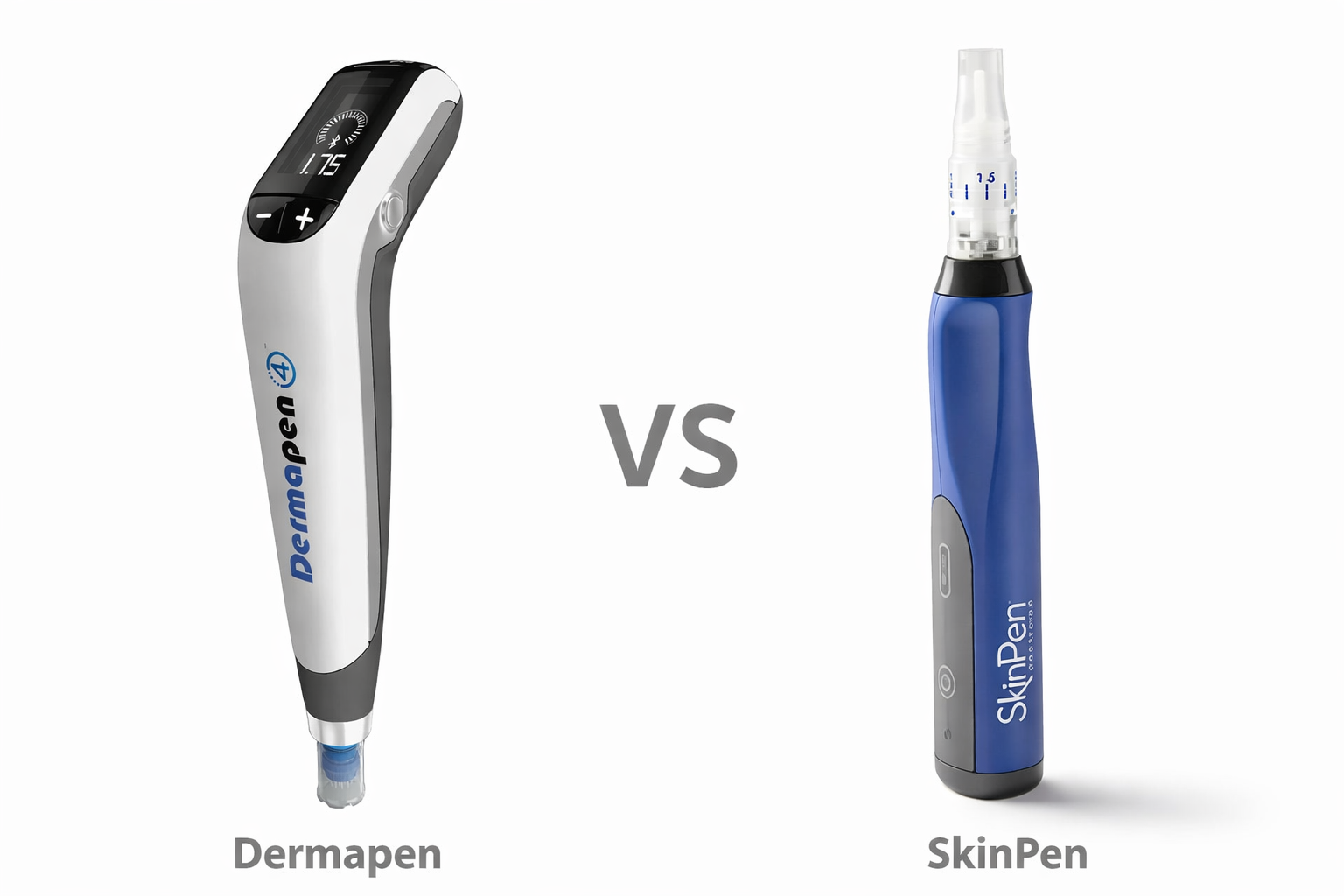
Dermapen and SkinPen are both traditional microneedling pen devices, meaning they create controlled microchannels to support collagen remodelling over time. Dermapen is often associated with adjustable depth and speed settings and cordless handling, which can give clinicians flexibility when tailoring intensity across different facial zones and concerns.
SkinPen is often described as a more standardised, protocol based system with a single use cartridge design that supports consistent needle delivery and sterility, and it is also widely recognised for being FDA cleared in the United States for specific indications. In practice, both can deliver excellent outcomes when performed properly, and results depend more on provider technique, safe parameter selection, and aftercare than on the brand name alone.
2. Microneedling With PRP
Microneedling with platelet rich plasma adds PRP prepared from your own blood. PRP is applied as part of the procedure to support recovery and collagen signaling.
This option is commonly considered for:
- Acne scar focused plans
- Patients who want a more intensive regenerative approach
- Patients comfortable with an additional step and added cost
Benefits often overlap with traditional microneedling, with many patients choosing it for scarring goals and recovery support.
3. Microneedling With Radiofrequency
Radiofrequency microneedling combines microneedling with thermal stimulation delivered through the needles. This is often chosen when the goal includes tightening as well as texture improvement.
It may be considered when the main concerns include:
- Texture issues with mild skin laxity
- Enlarged pores and uneven surface quality
- Scarring where added dermal stimulation is appropriate
Because it is more settings sensitive than traditional microneedling, it should be performed by trained professionals with careful parameter selection and suitable patient screening.
4. Microneedling with Hyaluronic Acid
Microneedling with hyaluronic acid usually refers to using hyaluronic acid topically during or after the procedure to support hydration and comfort. It is not the same thing as injectable hyaluronic acid.
This option is often chosen for:
- Patients who want a hydration focused recovery experience
- Patients prone to dryness and tightness after procedures
- Patients who want added comfort while still getting collagen stimulation from microneedling
It is best viewed as a supportive add on rather than a replacement for PRP or radiofrequency when deeper remodeling is the main goal.
Comparison Between Different Types of Microneedling
| Type | Best for | Typical downtime | Key strengths |
|---|---|---|---|
| Traditional microneedling | Visible pores, uneven texture, early fine lines, mild to moderate acne scars | Redness usually 1 to 3 days, dryness may follow for several days | Cost effective baseline collagen stimulation, versatile for many skin concerns |
| Microneedling with PRP | Acne scar focused plans, patients who want added recovery support | Similar to traditional, includes blood draw and PRP preparation | Often chosen for scarring series, may support healing and collagen signalling |
| Radiofrequency microneedling | Texture and pores plus mild laxity, tightening goals in selected cases, scars in selected cases | Redness usually a few days, sometimes longer depending on settings | Adds thermal collagen stimulation, can support firmer looking skin |
| Microneedling with hyaluronic acid | Hydration support, comfort focused recovery, dry or dehydrated skin types | Often the easiest recovery, redness typically short lived | Supports hydration and comfort, pairs well with gentle post procedure care |
What Kind of Results Should I Expect?
Most patients notice improvement in phases:
- First week: redness settles, skin may feel tight or dry as it heals
- Weeks 4 to 8: texture often starts looking smoother and pores can appear more refined
- Months 3 to 6: scar softening and fine line improvement become more noticeable as collagen remodeling matures
How many sessions you need depends on the concern:
- Pores and early fine lines often need fewer sessions than scarring
- Acne scars typically require a structured series
- Deeper scars may benefit from combination plans, such as subcision plus resurfacing approaches, based on medical assessment
Microneedling Before & After
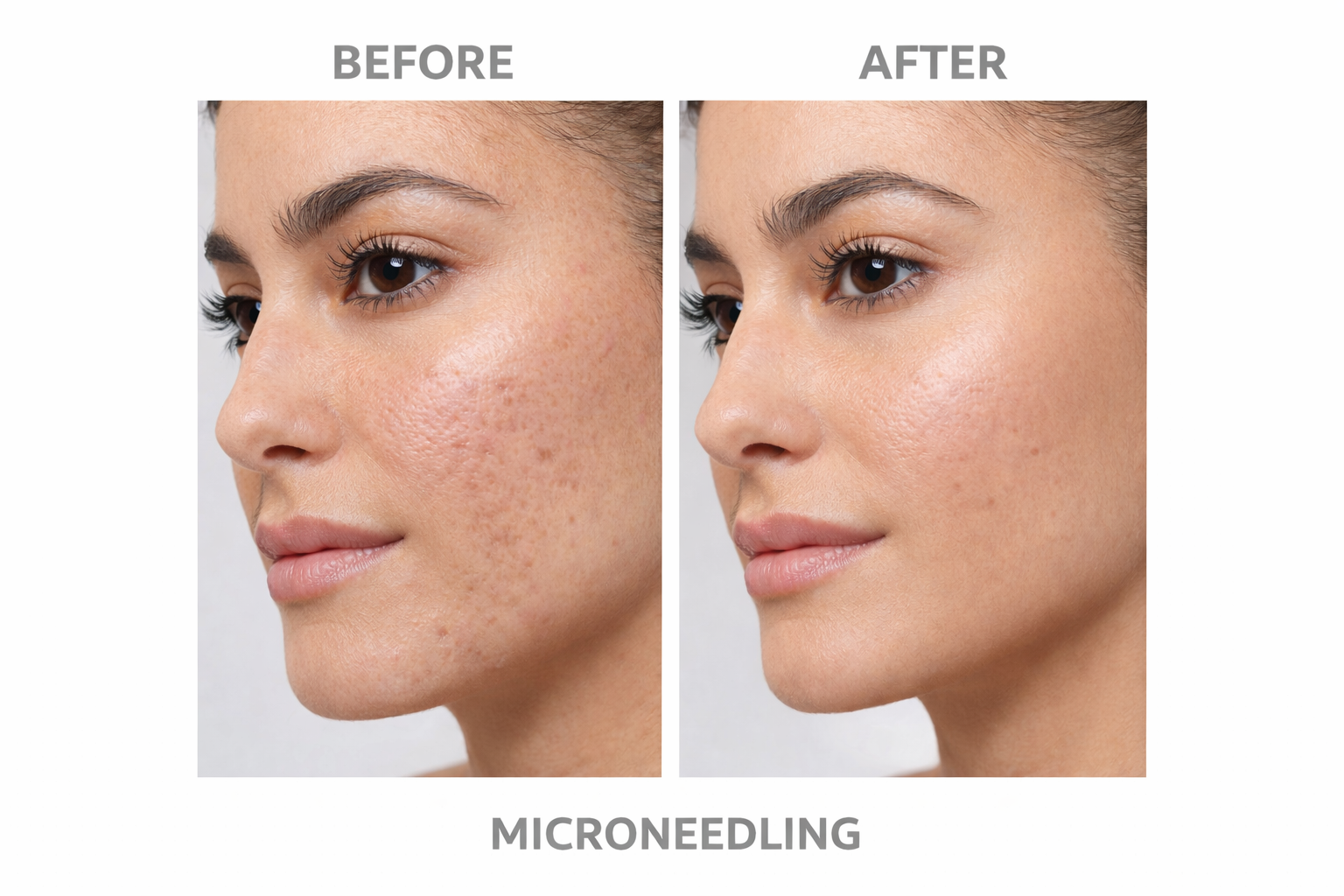
Before microneedling, skin texture often looks more uneven, with visible pores and more noticeable acne scarring. The after photo, taken a few months after a treatment series, typically shows smoother overall texture, more refined looking pores, and acne scars that appear softer. Results look gradual and natural, because collagen remodelling continues over several months after each session.
Does Microneedling have side effects?
Most side effects are temporary and expected:
- Redness and warmth for a few days
- Mild swelling
- Dryness or light flaking
- Temporary sensitivity to skincare and sun
Less common risks include pigment changes, infection, or scarring, which are more likely when treatment is performed improperly or aftercare is ignored.
Conclusion
Microneedling is a collagen-stimulating treatment that can noticeably improve skin texture when it’s done with the right technique, settings, and aftercare. By creating controlled microchannels, it triggers the skin’s natural repair process so collagen and elastin can rebuild gradually making pores look more refined, fine lines appear softer, and acne scars look smoother over a structured series.
The best results come from choosing the right version for your goals, following a realistic timeline (visible refinement in weeks, deeper remodeling over months), and keeping recovery calm and protected with gentle skincare and strict sun protection for the days that follow.
Let Us Help You Choose the Right Microneedling Option
Choosing between traditional microneedling, microneedling with PRP, or radiofrequency microneedling shouldn’t be based on trends or social media claims. Each option works differently, and the best choice depends on your skin concerns, scar type, sensitivity, and downtime preference.
At RegenX Clinic, we help you select the most suitable microneedling approach based on your goals and skin needs. Your consultation can help you understand:
- Which microneedling type fits your concerns (scars, pores, fine lines, texture)
- What results are realistic and how long they take
- How many sessions you may need for your skin goal
- What to expect during recovery and how to care for your skin afterward
Contact us on WhatsApp to learn more or book a consultation!
FAQs
1. How painful is microneedling?
Most clinics use topical numbing. Discomfort is usually described as manageable. Sensitive zones can feel stronger, but the goal is always tolerable treatment with safe settings.
2. How many sessions do I need?
It depends on your goal. Texture and pores may respond with fewer sessions. Acne scars usually need a series. Your plan should be based on scar type, skin type, and how your skin responds after the first session.
3. How long is the downtime?
Most people look red for a few days. Many return to work quickly with simple aftercare. Your exact downtime depends on the depth, the treatment type, and your skin sensitivity.
4. What should I avoid after microneedling?
Keep skincare simple and gentle. Avoid harsh active ingredients until your clinic clears them. Use sun protection consistently to reduce the risk of uneven pigmentation.
5. Who should not do microneedling?
People with certain medical conditions, poor healing tendencies, active infections, or uncontrolled inflammatory skin issues may need to postpone or avoid treatment. A proper consultation is the safest way to confirm suitability.
6. Is Dermapen or SkinPen better, and how do I choose?
Dermapen and SkinPen are both traditional microneedling pen devices and both can produce excellent results when used properly. The best choice usually depends on your skin goals, sensitivity, and how your clinician plans needle depth and settings for each area.
7. What is Percutaneous Collagen Induction, and is it the same as microneedling?
Percutaneous collagen induction is another term for microneedling and it refers to stimulating collagen through controlled microchannels created in the skin. The concept is the same, a planned injury response triggers collagen and elastin remodelling over time to improve texture, pores, fine lines, and acne scars gradually. The key is that results build over weeks to months and are best achieved with proper technique, safe settings, and good aftercare.